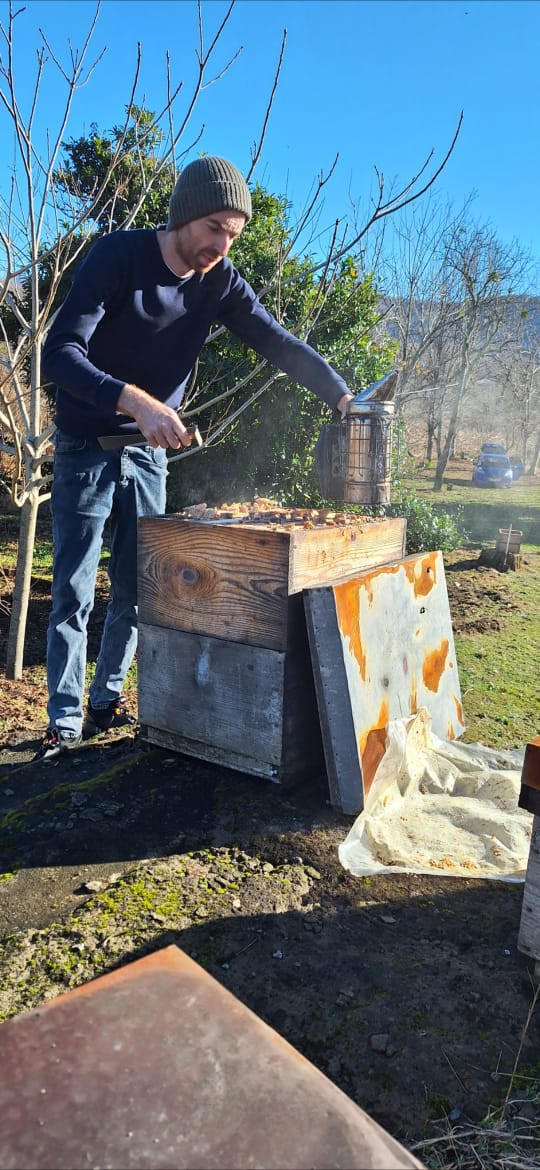
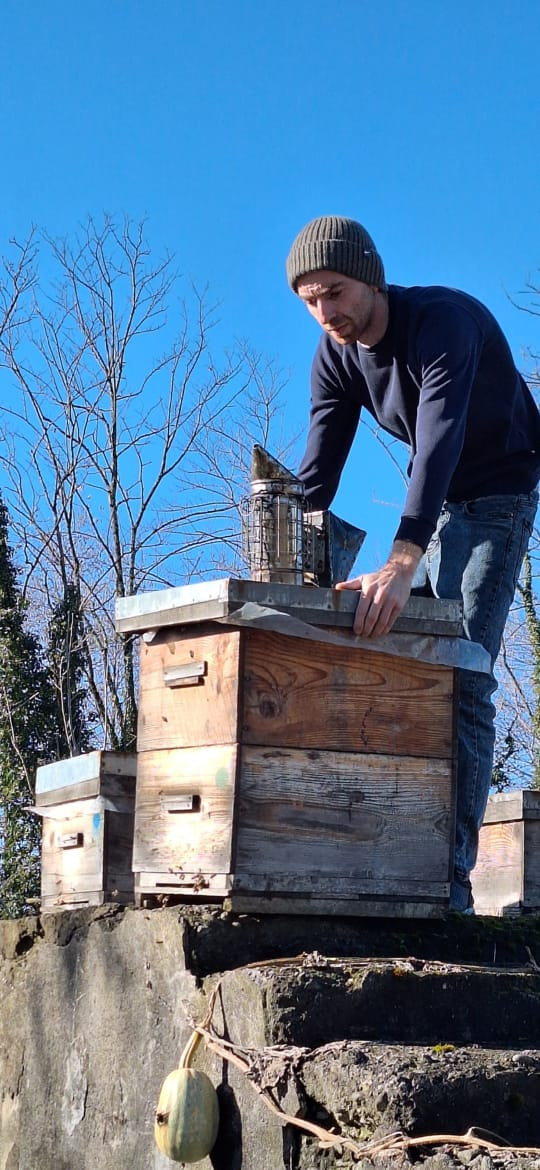
At just 15 years old, Giorgi Mamaladze began tending bee colonies alongside his father in Chokhatauri, Guria, in western Georgia. More than two decades later, he continues the family tradition with passion and steady dedication.
“I was just a kid when I started,” Mamaladze recalls, reflecting on how he’s grown his bee colonies from 70 to over 500.
Mamaladze’s honey has long been a local favorite. But as demand steadily grew, he realised that keeping up would require modern equipment and updated methods.
Fortunately, Mamaladze received a grant under the Capacitated Agricultural Practices and Consumer Awareness (CAPCA) project, funded by the European Neighbourhood Programme for Agriculture and Rural Development in Georgia ( ENPARD – Georgia). The project seeks to enhance food safety practices in the dairy and beekeeping industries, strengthen compliance with food safety standards, foster stakeholder engagement in alignment with Georgia’s Deep and Comprehensive Free Trade Area (DCFTA) agreement with the European Union, and raise consumer awareness of food safety regulations and consumer rights.
As part of the project, and under the EU4Business initiative, beneficiaries implemented Geo Gap – a local standard for the primary production of agricultural products (fruits and vegetables). Within this framework, Mamaladze has introduced international food safety and production standards, including GeoGAP and HACCP, into his operations. The grant also allowed him to invest in modern production equipment.
A honey extractor utilizes centrifugal force to separate honey from the comb, but first it must be filtered to remove bee residue. Initially, Mamaladze relied on a small team to do this by hand. Now, with the introduction of a honey grinder machine, the work of three or four people is done by a single device. Meanwhile, the homogeniser ensures a smooth, even consistency in every batch of honey.
“The introduction of these standards and new machinery has transformed our entire production process,” Mamaladze explains. “The advanced equipment ensures product consistency, allowing us to offer consumers the same high-quality taste every time.”
Previously, Mamaladze produced around 10 tonnes of honey annually. With improved equipment, he has doubled his output to 20 tonnes, and now he is aiming for export.
“I have everything I need,” he said. “Good equipment, high production standards, and delicious honey.”
Mamaladze’s beekeeping enterprise has become a model for other farmers in the region. He is always happy to welcome visitors, whether newcomers or experienced beekeepers, who want to learn more and see the production processes in action.